
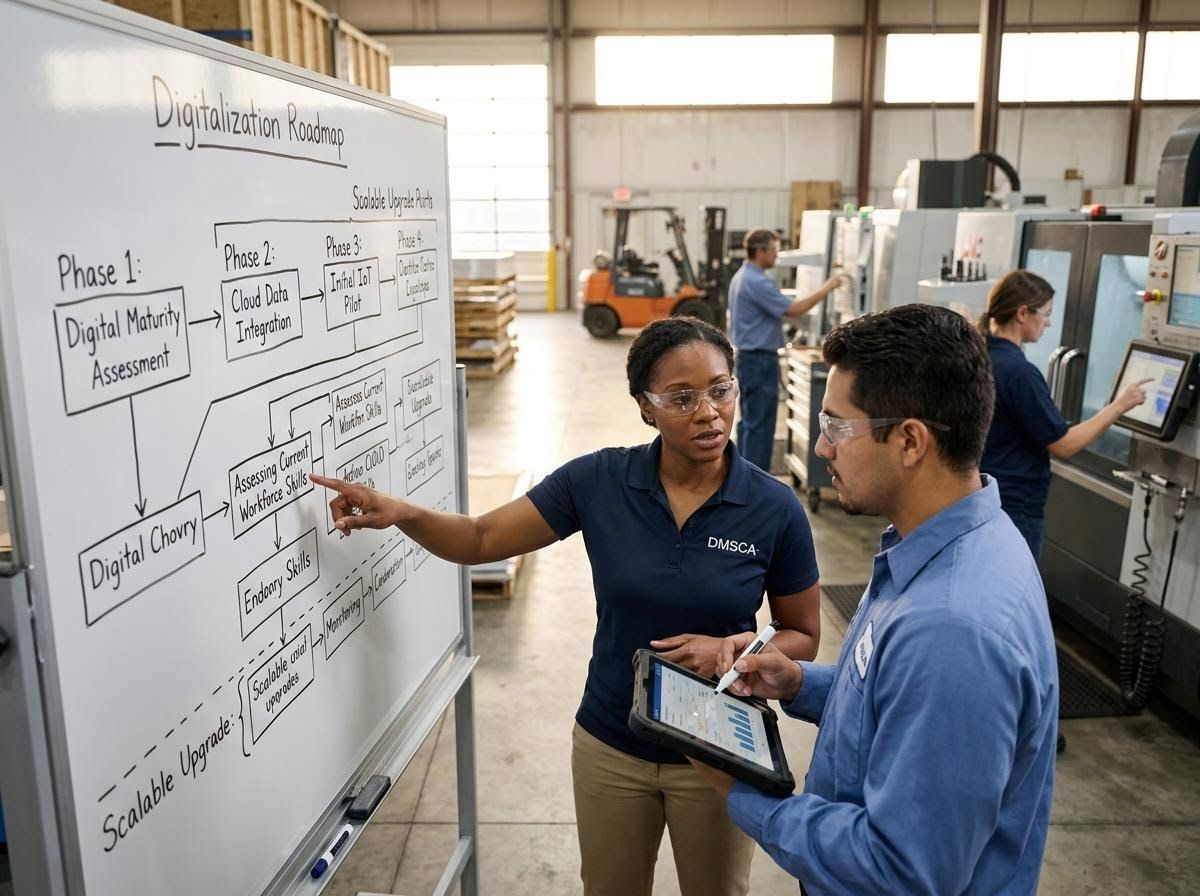
Navigating the complexities of modern manufacturing requires a clear vision, especially for small and medium-sized enterprises (SMEs). Building a digitalization roadmap is essential for these businesses to not only survive but thrive in a rapidly evolving industrial landscape. This strategic blueprint enables manufacturers to systematically assess their current digital capabilities and plan for scalable technological upgrades, ensuring they remain competitive and resilient. Domestic Manufacturing Supply Chain Alliance (DMSCA) is committed to supporting manufacturers through this transformation, fostering growth and innovation within the domestic supply chain.
Assessing Your Current Digital Maturity
Before embarking on any digitalization journey, it's crucial for small and medium manufacturers to understand their current digital maturity. This involves a comprehensive self-assessment that scrutinizes existing processes, technologies, and workforce capabilities. Begin by mapping out your operational workflows, from procurement and production to logistics and customer service, identifying areas where manual tasks, outdated equipment, or disconnected systems create bottlenecks. Evaluate your current data infrastructure: are you collecting meaningful data, and more importantly, are you able to analyze it to inform decisions? Understanding these foundational elements provides a realistic baseline for where your business stands and helps pinpoint the most impactful areas for initial digital investment.
Crafting a Scalable Digital Strategy
With a clear understanding of your starting point, the next step is to develop a phased, scalable digital strategy. This isn't about overhauling everything at once, but rather identifying specific pain points that can be addressed with targeted digital solutions. For small manufacturers, embracing Industry 4.0 for small manufacturers means starting with foundational technologies like cloud computing for data storage and access, or basic automation for repetitive tasks. Prioritize solutions that offer immediate returns on investment and can be expanded or integrated with future technologies. The goal is to build a roadmap that allows for incremental upgrades, ensuring that each step forward contributes to a more efficient, agile, and data-driven operation without overwhelming resources or disrupting core business functions.
Empowering Your Workforce and Partnerships
Technology alone is not enough; successful digitalization hinges on the people and partnerships that support it. Investing in training and upskilling your existing workforce is paramount to ensure they can effectively utilize new digital tools and processes. This not only builds internal capability but also fosters a culture of innovation and adaptability. Furthermore, strategic collaboration plays a vital role. Engaging in manufacturing supplier development and smart manufacturing supplier development initiatives can enhance your supply chain's overall digital strength. Working with partners who are also advancing digitally creates a more integrated and resilient ecosystem, potentially opening doors to becoming certified economically inclusive manufacturing suppliers by demonstrating advanced capabilities and commitment to inclusive practices.
Embracing digitalization is no longer an option but a necessity for small and medium manufacturers aiming for long-term success. By systematically assessing digital maturity, planning scalable upgrades, and empowering both workforce and partnerships, businesses can build a robust roadmap for the future. Domestic Manufacturing Supply Chain Alliance (DMSCA) is dedicated to providing the resources and training necessary to navigate this transformative journey. To explore how your manufacturing operation can leverage specialized programs and expert guidance to achieve its digitalization goals, we invite you to learn more about our comprehensive support initiatives.